- Phone: +977-9808226344
- Email: critnepal@gmail.com
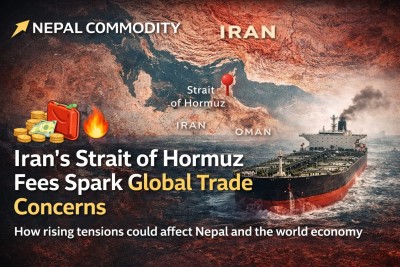
Iran’s Strait of Hormuz Move: A Wake-Up Call for Global Trade — and Nepal
The recent reports of Iran seeking to impose transit fees—reportedly up to $2 million—on vessels passing through the Strait of Hormuz have sparked global concern. While details remain fluid and enforcement appears selective, the message is clear: one of the world’s most critical maritime chokepoints is becoming increasingly politicized.
For the international community, this development is not just about shipping fees—it is about control, sovereignty, and the future of global trade norms. The United States and its allies have already pushed back, emphasizing that the Strait of Hormuz is an আন্তর্জাতিক waterway that must remain open and accessible under established maritime law. Any attempt to monetize or restrict passage could set a dangerous precedent.
Why It Matters Globally
Nearly one-fifth of the world’s oil supply passes through the Strait of Hormuz. Even minor disruptions or uncertainties in this corridor can trigger ripple effects across global energy markets—raising oil prices, increasing freight costs, and ultimately fueling inflation worldwide.
If Iran continues to tighten control or institutionalize such fees, shipping companies may face higher operational risks, insurance premiums, and rerouting costs. The broader implication is a more fragmented and uncertain global trade environment.
Implications for Nepal
For a landlocked country like Nepal, the effects may seem distant—but they are very real.
Nepal depends heavily on imported petroleum products, primarily routed through international markets that are directly influenced by Middle Eastern supply chains. Any spike in global oil prices translates quickly into higher fuel costs domestically. This, in turn, impacts transportation, manufacturing, agriculture, and overall inflation.
Moreover, increased global freight costs could affect the price of essential imports, from edible oils to industrial goods. For traders and businesses operating in Nepal’s commodity markets, volatility in global logistics can create both risks and opportunities—but uncertainty remains the dominant theme.
A Strategic Moment
This situation underscores the importance of diversification and resilience. Nepal must continue exploring strategies to cushion external shocks—whether through improved energy planning, alternative sourcing, or more efficient supply chain management.
At the same time, global powers must recognize the risks of escalating tensions in critical trade corridors. Stability in regions like the Strait of Hormuz is not just a geopolitical issue—it is a global economic necessity.
Conclusion
Iran’s reported move is more than a regional development; it is a signal of shifting dynamics in global trade control. For Nepal, it serves as a reminder that in an interconnected world, even distant घटनाएँ can have immediate economic consequences.
As the situation evolves, vigilance, adaptability, and strategic planning will be key—for nations, businesses, and markets alike.
Shop Online www.milanwholesale.com
